
IOC resumes funding to IOA after "corrective measures" to resolve disputes and governance issues

'Trump has personally weighed in to overcome doubts and reservations about Pakistan among his top advisors.'

The bill to amend the IIM Act of 2017 was introduced in the Lok Sabha last Friday amid disruptions by opposition members over the Manipur violence issue.

The National Sports Governance Bill was on Tuesday passed by the Parliament with Rajya Sabha giving its nod a mere 24 hours after Lok Sabha.

His successor issue is also expected to flare up fresh tensions between Beijing and Washington as China's policy comes in conflict with the US Tibetan Policy and Support Act of 2020, which reaffirmed America's steadfast support for the Dalai Lama and Tibetan Buddhism.

A controversy has erupted after an NCERT Class 8 textbook depicted present-day Rajasthan as part of the Maratha Empire, drawing criticism from royal families and political leaders who call the depiction factually incorrect and misleading.

The Supreme Court expressed serious concern over the Enforcement Directorate summoning advocates for offering legal advice or representing clients during investigations, calling for guidelines on the matter.

Parliamentary Affairs Minister Kiren Rijiju feels that the National Sports Governance Bill, which is set to be tabled in the monsoon session beginning on Monday, will usher in a 'new era' for sports in India.
The three-member panel will examine the "current legal and administrative status of the BFI and assess the implications of the delay on the governance and functioning of boxing in India."

Implementation of sports bill in 6 months, regulation of participation standard safeguard: Mandaviya

The Rs 1-trillion Research Development and Innovation (RDI) fund, which was announced in the July budget for FY25, of which Rs 20,000 crore has already been allocated, will be operationalised in the next two to three months, a top official said.

Congress MP Mohammad Jawed and AIMIM president Asaduddin Owaisi have challenged the validity of the Waqf (Amendment) Bill, 2025 in the Supreme Court, arguing that it violates constitutional provisions. The petitions claim the bill imposes arbitrary restrictions on Waqf properties and their management, undermining the religious autonomy of the Muslim community. They also allege that the bill discriminates against Muslims by imposing restrictions not present in the governance of other religious endowments. The bill was passed in the Rajya Sabha and Lok Sabha, with the petitioners arguing that it introduces limitations on the creation of Waqfs based on the duration of one's religious practice, mandates inclusion of non-Muslim members in Waqf administrative bodies, and shifts key administrative functions to government officials, thereby diluting the autonomy of Waqf management.

A heavy rain Sunday morning did little to dispirit the thousands who gathered in the main courtyard of Tsuglagkhang, the Dalai Lama temple, to observe the 90th birth anniversary of the 14th Dalai Lama.

'Despite being a software powerhouse, we're not producing proportionate original IP, frameworks, or global tech products originating in India.'

The era where nations thrived through rigid alignments is giving way to an age where the connective State defines power. For India, that era has arrived, points out Dr Nishakant Ojha.

The Bharat Mata controversy in Kerala shows how political and symbolic fights between the state and the Centre have taken attention away from education, throwing the state's oldest university into confusion and disorder, observes Shyam G Menon.
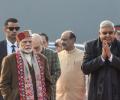
By getting Jagdeep Dhankhar to resign at short notice, Narendra Modi has sent a message to his own ideological clan that he brooks no one trying to get too big for their boots, observes Modi biographer Nilanjan Mukhopadhyay.

Over one lakh Muslims gathered in Karnataka to protest the Waqf Amendment Act, 2025, which they say erodes the autonomy of Waqf institutions and threatens their rights. The protest, organized by the Karnataka State Ulema Coordination Committee, saw strong opposition to provisions in the amended law that they argue allow for coercive acquisition of Waqf properties. Leaders alleged that the amendment is part of a broader political agenda and urged the community to uphold their legal and constitutional rights.

"The moment we let technology take the driver's seat in the legal system, we begin to erode the public's faith in us and with it, the foundations of the rule of law," CJI Gavai added.

The ministry said the Games Technical Conduct Committee, list of disciplines in the National Games, and eligibility criteria for participants should be communicated to it at least six months prior to the showpiece.

President Trump with his MAWA has unwittingly provided us this opportunity. Will PM Modi grasp this and leave a legacy of an ushered in scientific and technological revolution in India, asks Colonel Anil A Athale (retd).

India's Foreign Secretary Vikram Misri has underscored the importance of not equating the victims and perpetrators of terror attacks, highlighting the need for global unity in combating terrorism. Speaking at Raisina Tokyo 2025, Misri expressed appreciation for Japan's support following the recent terror attack in Pahalgam, India. He also cautioned against the trend of some Western countries hyphenating India and Pakistan in the context of their recent military confrontation. Misri further outlined India's economic aspirations and its commitment to becoming a factor of stability in a turbulent world.

The judge, however, ruled that there was a clear prima facie case under Section 354 of IPC for 'assault or criminal force to woman with intent to outrage her modesty".
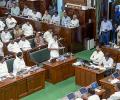
The Tamil Nadu Assembly passed a resolution on Thursday condemning the Centre's proposed Waqf Amendment Bill 2024, calling for its recall. Chief Minister M K Stalin argued that the amendment interferes with religious affairs and would negatively impact the Muslim minority. The resolution was unanimously passed by the Assembly, with support from all parties, including the opposition AIADMK and PMK. The BJP, however, walked out in protest, accusing the ruling DMK of engaging in divisive politics. The bill aims to streamline the Waqf Board's work and ensure efficient management of Waqf properties but has been criticized for potentially encroaching on religious freedom and autonomy. The Tamil Nadu government claims that the amendment would lead to government control over the Waqf Board and its properties, impacting its autonomy and potentially allowing for government acquisition of Muslim-owned lands.

Will the Draft UGC Regulations 2025 undermine our universities? Unlikely, notes Professor Mohammad Sajjad, citing how AMU has utilised its exceptional autonomy.

'Providing funds and autonomy to a few institutions that may not have the intent to excel must not become a case of trying to feed those who are not hungry and starving those who are famished,' says Jitendra Kumar Das, Director, FORE School of Management, New Delhi.
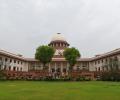
The Indian government has defended the Waqf (Amendment) Act, 2025 in the Supreme Court, arguing that there cannot be a blanket stay on the law as there is a presumption of its constitutionality. The Centre countered the pleas challenging the law's validity, asserting that the amendments were undertaken after a comprehensive study by a parliamentary panel. The government also highlighted the "reported misuse" of earlier provisions and the increase in waqf land, claiming that over 20 lakh hectares were added after 2013.
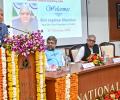
Vice President Jagdeep Dhankhar has questioned the Chief Justice of India's involvement in executive appointments, specifically citing the selection of the CBI director. He believes this practice undermines democratic principles and calls for revisiting the existing norms. Dhankhar also raised concerns about the "doctrine of basic structure", suggesting it has a debatable jurisprudential basis. He emphasized the importance of each institution operating within its constitutional boundaries and highlighted the need for coordinated autonomy. The vice president also discussed the need for a balanced approach to judicial review and the importance of judges focusing on judgments rather than other forms of expression. He stressed the need to revisit the current state of affairs to restore the judiciary's sublimity.
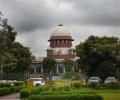
The Supreme Court of India will likely hear a batch of petitions challenging the constitutional validity of the Waqf (Amendment) Act, 2025 on April 15. The Act, which came into force on April 8, has been met with widespread criticism from various stakeholders, including politicians, the All India Muslim Personal Law Board (AIMPLB), and Jamiat Ulama-i-Hind. They argue that the law is discriminatory and violates the fundamental rights guaranteed under Articles 25 and 26 of the Constitution. The petitions allege that the amendments give the government more control over the administration of Waqf, effectively sidelining the Muslim minority from managing their own religious endowments.
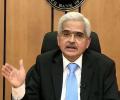
Reserve Bank Governor Shaktikanta Das on Tuesday said the fiscal-monetary coordination was at its best during the last six years even as he thanked Prime Minister Narendra Modi for giving the opportunity to head the monetary authority of the country. Das, in a series of posts on X, on his last day of his six-year term as RBI Governor, also thanked the Finance Minister, various stakeholders and his colleagues at the central bank.

A three-judge Supreme Court bench will hear petitions challenging the constitutional validity of the Waqf (Amendment) Act, 2025, on April 16. The petitions, including those by politicians and the All India Muslim Personal Law Board (AIMPLB) and Jamiat Ulama-i-Hind, were filed in the top court challenging the validity of the newly-enacted law. The Centre has filed a caveat in the apex court, seeking a hearing before any order is passed.

'Women' as a political constituency appears to be an idea that has come of age. It is changing India in ways that we only dimly understand, asserts Aditi Phadnis.

The Supreme Court on Friday deferred the question of Aligarh Muslim University's minority status to a fresh bench and overruled the 1967 judgment that said the university cannot be considered a minority institution since it was created by a central law.

The BJP also announced a Rs 5 meal scheme for all, named after religious guru Anukul Chandra, and setting up of a Regional Institute of Medical Sciences hospital in Agartala.
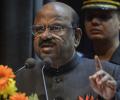
West Bengal Governor CV Ananda Bose skipped the convocation ceremony of Jadavpur University, alleging that the event was organized in violation of several rules and laws. The governor, who is the chancellor of the university, claimed the convocation was "illegal" and "fraught with malpractices." The university administration refuted the allegations, stating that all procedures were followed and the governor's approval was sought. The incident has sparked controversy, with some accusing the governor of acting at the behest of the BJP government and undermining the autonomy of the university.

'As the global economy undergoes significant transformations in 2025, India's ability to navigate the complexities of trade wars, financial realignments, and emerging blocs will be pivotal,' explain Harsh V Pant and Soumya Bhowmik.

They say degree or diploma doesn't make a difference anymore.
With the government considering a new Bill to make the Indian Institutes of Management answerable to Parliament, India Inc leaders say the time has now come to grant complete autonomy to these institutes.

US envoy Eric Garcetti on Thursday said he respects that India likes its "strategic autonomy", but in times of conflict, there is no such thing as strategic autonomy, even as he pitched for forging a stronger partnership between New Delhi and Washington.
 © 2026 Rediff.com - Advertise with us - Disclaimer - Privacy Policy - Sitemap - Feedback - About us - Terms of use - Grievances